
Land, Gold, Crypto: How Three Generations of Indians Redefined the Meaning of Safe
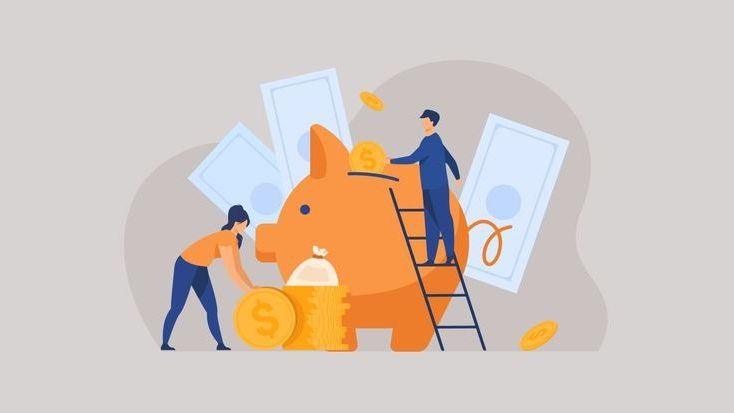
Walk into the home of a family spanning Boomers, Millennials, and Gen Z, and you'll find three completely different answers to the question, "Where do you put your money?"
Decades apart, the target stays the same: security, growth, and something to leave behind. But how they pursue it looks almost nothing alike. Walk into the home of a family spanning Boomers, Millennials, and Gen Z, and you'll find three completely different answers to the question, "Where do you put your money?"
Throughout the generations the idea of security and growth changed; for example, our grandparents who experienced partition realised the importance of the three pillars of 'Roti, Kapda, Maakan’, which translate to 3 basic needs to survive, meaning roti as three-time food, decent clothes to wear and a decent place to sleep, so they heavily invested in real estate. Later the millennials saw the security in PPFs, insurances and gold as they witnessed industrialisation, whereas being overexposed to the internet, Gen Z either invests in cryptocurrency or their ‘buy now, panic later' makes them fall into EMI traps.
The Boomer Blueprint: When Earth Was the Only Bank
For a generation of our grandparents that had lived through the chaos of Partition, the displacement of millions, and experienced the death of their close ones for a newly independent nation. What mattered to them as a luxury were the basic necessities, which were roti, kapda and makaan.
The instinct to invest in land was not merely financial; it was existential. A plot of land meant you could grow food on it, build a home on it, or sell it when everything else failed. It was the physical embodiment of Maakan, the third pillar, and it represented all three at once. You could feed your family from it, shelter your family within it, and leave it behind as proof that your life had amounted to something.
The economic landscape of post-independence India turned real estate into a premier asset class. The Green Revolution acted as a catalyst, particularly in the North, inflating land prices far beyond initial projections. With the industrialisation of Ludhiana and the corporate development of Gurugram, agricultural holdings transitioned into high-value urban assets. For the Boomer generation, land was no longer just a place to live—it was the cornerstone of their generational wealth.
But the mistakes were real.
The greatest flaw in the investment model by our grandparents was its illiquidity. Land cannot be partially sold. When a medical emergency strikes, you cannot sell one room of your house to cover the hospital bill. Entire families watched elderly parents struggle with cash-flow crises while sitting on properties worth crores they couldn't liquidate without legal complexity, family disputes, or a buyer willing to pay the right price at the right time.
And then there was the paperwork, a silent crisis waiting to happen. Land records in India were, and often remain, a legal maze. Disputed titles, encroachments, inheritance complications, and missing registry documents have swallowed the wealth of entire families in courtrooms.
The Millennial Middle Ground: Security Over Everything
Millennials in India came of age during a period of dizzying contradictions. They watched the economy liberalise, watched satellite television arrive in living rooms, and watched the IT boom turn engineers into the new middle class. They had more opportunities than their parents and far more anxiety about it.
This was the generation that dismantled the joint family system in practice, even while honouring it in sentiment. Without the safety net of a dozen relatives under one roof, they suddenly had to plan for everything themselves: their own retirement, their children's education, their parents' medical bills, and the mortgage on a home that cost ten times what their parents had paid.
The response was deeply systematic. PPF accounts were opened religiously. Insurance endowment policies were bought with the same reverence that their parents had bought land. Gold at every wedding, every Dhanteras, and every financial milestone was accumulated as both cultural expression and lavishes of gold and silver. For those who became aware of mutual funds, SIPs became the quiet monthly ritual.
The emotional core of Millennial investing was protection. Gold doesn't vanish in a bank collapse. Insurance is backed by the government. PPF is sovereign-guaranteed. Every instrument they chose had a safety net beneath the safety net.
But again the mistakes were equally real.
The love for insurance-linked investment products, endowment plans, money-back policies, and ULIPs was arguably the most expensive financial habit of the Millennial generation. These instruments tried to be a 'jack of all trades' but ended up a master of none; the investment returns were weak, and the insurance cover was never enough. The returns on a 20-year endowment plan, when adjusted for inflation, often barely broke even. Meanwhile, the actual life cover provided was a fraction of what a pure term plan would have offered at one-tenth the premium. Millions of Millennials paid for "safe" investment products that quietly eroded their real wealth while giving them the psychological comfort of a policy document.
Gold, too, carried hidden costs, making charges on jewellery that reduced resale value by 20 to 30 per cent; storage risks; and the fact that gold as jewellery is rarely sold except in genuine desperation, meaning it functions more as locked wealth than a liquid asset.
The Gen Z Gamble: Speed, Screens, and the FOMO Economy
No generation in history has had access to more financial information or acted on it more impulsively.
Gen Z grew up with the internet not as a tool but as an atmosphere. Financial literacy arrived not through bank advisors or parents but through YouTube channels with animated explainers, Reddit threads where strangers shared portfolios, Instagram reels where a 22-year-old was a single tap away, and Twitter feeds where a single Elon Musk tweet moved an entire market.
Gen Z didn't discover crypto through textbooks; they discovered it through group chats and Instagram reels. Opening a crypto account took less time than opening a savings account. More importantly, this generation had grown up watching institutions fail due to demonetisation, the PMC Bank collapse, and Yes Bank's freeze. For them, an asset outside government control wasn't a gamble. It was a reasonable response to a system that had already let their families down.
The EMI trap arrived hand-in-hand with the smartphone economy. Buy Now Pay Later platforms – MoneyView made it possible to acquire anything immediately and worry about payment later. The new iPhone, the gaming laptop, the international trip – none of it required waiting. EMIs democratised access to goods that previous generations saved for years to afford.
What they also did was silently restructure an entire generation's relationship with debt. For Boomers, debt was a last resort. For Millennials, a home loan was acceptable; it was productive debt, building an asset. For Gen Z, consumer debt for lifestyle purchases became normalised. Multiple EMIs running simultaneously, credit card revolving balances, and buy now panic later dues created invisible monthly drains that made wealth accumulation nearly impossible, even on decent salaries.
The mistakes are still being made, in real time.
Crypto's volatility is not a bug that will eventually be fixed; it is a structural feature of an asset class without intrinsic earnings, dividends, or productive capacity underlying its price. The generation that bought Bitcoin at ₹40 lakh and watched it hit ₹20 lakh in 2022 learned this painfully. Many held on correctly, as it turned out. Many others panic-sold at the bottom, crystallising losses and walking away from the experiment entirely.
The deeper issue is the absence of basics. A significant portion of Gen Z investors who actively trade crypto and stocks have no emergency fund, no term insurance, no health insurance outside their employer's group cover, and no long-term investment vehicle compounding quietly in the background. They are sprinting in the short term while leaving the marathon unrun.
Conclusion
Every generation invested in response to the dominant fear of its time. Boomers feared displacement, so they bought land. Millennials feared uncertainty, so they chased guarantees. Gen Z fears missing out, so they chase speed. None of these fears were wrong, but all of them became mistakes the moment they turned into the only strategy. The few wrong ones that built lasting wealth were never the ones who found the perfect asset. They were the ones who held some land and some equity, some security and some growth, some patience and some ambition across every era, in every market.
The narrative of investment will keep changing. New asset classes will emerge that Gen Z will struggle to explain to their own children, just as their grandparents struggle to understand crypto today. The products will change. The fears will change. But the fundamental truth will not: wealth belongs to those who approach money with curiosity rather than panic, with knowledge rather than just instinct, and with a horizon long enough to let time do its quiet, compounding work. The best investment was always the one you understood well enough to hold through the storm.