
Not All Beans Are Equal: What Coffee Teaches Us About "Quality" Investing
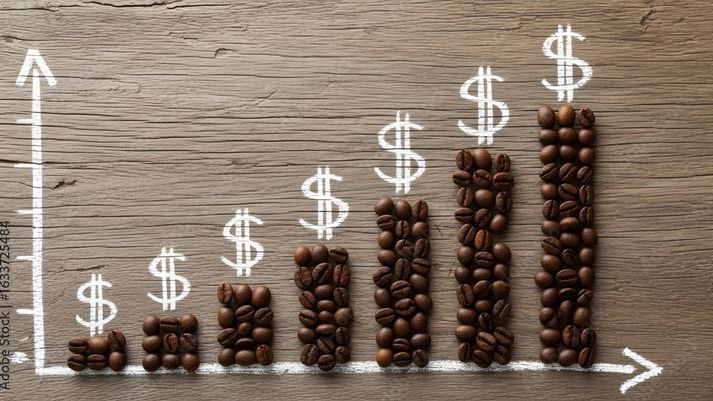
Quality isn’t always visible on the surface whether you’re choosing coffee or investments. Just as a great coffee bean is defined by its origin, processing, freshness, and craftsmanship.
Walk into any specialty coffee shop and you'll see two prices for what looks like the same product. A regular filter coffee for Rs 80. A single-origin, freshly roasted pour-over for Rs 350. Both are "coffee." Both will wake you up. So why does one cost four times more? Because quality isn't visible on the surface it's in things you can't see just by looking at the cup: where the bean was grown, how it was processed, how fresh the roast is, how skilled the hands that made it were. Investing works exactly the same way. And most investors, without realizing it, are picking coffee purely by price.
The "Cheap Bean" Trap
A lot of investors chase the fund with the highest recent return, or the lowest NAV, or the one their cousin made money in. It's the equivalent of grabbing the cheapest instant coffee off the shelf because the tin looks fine and it's, technically, coffee. But cheap beans usually got cheap for a reason: poor soil, rushed harvesting, low-grade processing. In investing, that "cheapness" shows up as a fund riding one hot sector that looks great in a bull run but turns brutal the moment that sector corrects, or a company whose earnings look inflated by one-time gains rather than real business strength, or a shiny new fund launch with a high projected return but no track record to actually judge it against. It tastes fine for a while. Then the bitterness shows up.
What "Quality" Actually Means In Beans and in Portfolios
Specialty coffee roasters judge beans on things casual drinkers never think about: altitude grown, soil composition, processing method, defect rate, freshness of roast. None of it is visible in the final cup at a glance you have to know what you're tasting for. Quality investing works on a similar, less visible checklist. Where a bean's origin and growing conditions determine its character, a company's business model and competitive moat determine its staying power. Where a low defect rate signals a clean harvest, low debt and clean accounting signal a clean balance sheet. Where a consistent roasting process produces a reliable cup every time, consistent, capable management produces reliable performance every year, not just one lucky call. And where freshness of roast determines whether a bean still has its character left, the sustainability of a company's earnings determines whether its growth is real or borrowed from the future. A "quality" mutual fund or stock isn't the one with the flashiest recent return, it's the one built on fundamentals that hold up when conditions change, the way a well-sourced bean tastes consistent whether it's brewed as filter, pour-over, or espresso.
The Compounding Effect of "Just Slightly Better"
Here's the part that surprises people: the difference between an average bean and a great bean isn't 10x in the cup but the experience compounds. Great beans, brewed consistently, build a reputation, repeat customers, a business that lasts decades. Mediocre beans might get you through this quarter's sales, not the next decade. Quality investments behave the same way. A slightly-better-run company, held over 15–20 years, doesn't just perform slightly better; the compounding gap becomes enormous. A business with a real moat, honest management, and consistent execution keeps reinvesting its profits well, year after year, while a mediocre one erodes shareholder value slowly, quarter by quarter, until one bad cycle exposes it completely. This is why quality-focused fund managers obsess over things that look boring in the short term debt levels, return on capital employed, promoter integrity, cash flow consistency the equivalent of a roaster obsessing over bean moisture content. It doesn't show up in this week's headline. It shows up in year twelve.
The Investor's Palate Has to Be Trained Too
One more parallel worth sitting with: a novice coffee drinker often prefers the cheap, sweet, over-roasted blend, simply because it's what their palate is used to. Specialty coffee can taste "weaker" or "sour" to an untrained tongue, even though it's objectively better made. New investors often have the same reaction to quality investing. A steady, boring, quality-focused fund that returns 13% consistently can feel underwhelming next to a volatile small-cap fund that shot up 40% last year. The flashy option tastes more exciting. It just doesn't hold up and often gives back those gains, with interest, on the way down. Training your palate, or your investing instinct, to value consistency over sugar rush is uncomfortable at first. It's also the entire difference between a portfolio that compounds for twenty years and one that's rebuilt from scratch every time a trend dies.
The Takeaway
You can't taste the altitude, the soil, or the processing method in a cup of coffee just by looking at it. You can't see debt structure, governance quality, or earnings durability in a stock chart just by looking at the price line either. In both cases, quality is invisible on the surface and everything underneath. Cheap gets you a cup. Quality gets you a habit worth keeping for decades.