
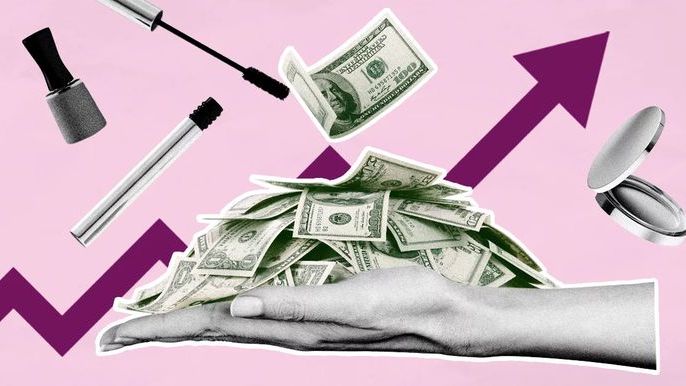
From the pink tax on everyday products to the safety tax women pay just to get home, being a woman comes with hidden expenses. And the bill goes far beyond money.
On the safety tax, the pink tax, and the quiet math of being a woman in the world.
Last week, I went shopping after work for some basic necessities and noticed something. An "XYZ" brand soap packaged for women was ₹158. The same brand's soap packaged for men was ₹125. As far as I could tell, the ingredients and manufacturing were almost identical, and both had the same base price of ₹250. Men's got about 49% off. Women's got about 36%.
And if you think that's the only extra price a girl has to pay, you're wrong.
By the time I was done, it was 8:30 p.m. and properly dark. I had three ways to get home:
- Walk, 15 minutes. Free, but not safe.
- Public transport, ₹20–30. Cheap, but again, a bit risky.
- Cab, ₹100–125. Kind of safe.
So basically, everything comes with a price. Even safety. And these silent taxes didn't stay on my bill. They followed me out of the store.
Most women I know would pick the third option, and then do the rest of the routine: share the live location, text someone on reaching home. And if your parents are anything like most Indian parents, there's probably a phone call somewhere in between asking why you're out so late in the first place.
The cab fares, the hostel with better security, the pepper spray, the constant mental math of whether something is worth the risk: it all adds up. Nobody sends you a bill for it, but you're paying anyway.
Welcome to the safety tax: the money, time, freedom, and mental energy women spend navigating a world where their safety is never entirely taken for granted.
But it isn't the only extra cost. I'd already spotted the other one at the soap shelf, hiding behind pastel packaging: the pink tax.
First, the pink tax
The pink tax isn't an actual tax. There's no government form and no charge labelled because you're a woman. It's a pricing pattern in which products and services marketed to women often cost more than comparable ones marketed to men.
With my soap, the trick wasn't even a higher sticker price. Both started at ₹250. The men's version simply got a bigger discount, which is how a ₹33 gap appeared at the billing counter. It's easy to miss when you're grabbing things off a shelf after a long day.
And soap isn't alone:
- Razors, shaving gel, and deodorants sold in separate men's and women's versions.
- Shampoo and body wash where the biggest difference is fragrance and packaging.
- Haircuts where a woman with short hair might pay more than a man with the same length.
- Dry cleaning where women's garments can cost more to clean than comparable men's.
Of course, not every price difference is discrimination. Formulas, designs, and costs can genuinely differ. But when two products are functionally similar and one costs more simply because it's marketed to women, it's worth asking what you're paying for. In 2015, the New York City Department of Consumer Affairs examined nearly 800 products with male and female versions and found that those marketed to women cost more on average across several categories. The exact gap varies by product, market, and study.
The pink tax you can't opt out of
You can buy the men's deodorant and call it a day. But what about expenses that aren't optional?
Menstruation is the obvious example. Pads, tampons, pain relief, medical consultations: recurring costs attached to a biological reality. India exempted sanitary napkins from GST in July 2018, after years of campaigning. That mattered. But removing a tax doesn't automatically make menstrual care affordable for everyone. For someone with a comfortable income, it's a minor inconvenience. For someone struggling to afford necessities, it can mean choosing what to go without.
One biological reality. Very different financial consequences.
Now, let's talk about the safety tax
If the pink tax is the cost you can see on a shelf, the safety tax is the one hidden inside your everyday decisions. It's the difference between the cheapest route and the one that feels safer, and between accepting an opportunity and wondering how you'll get home afterwards.
The house you pay more to live in. A cheaper PG might be closer to college but have no security guard. A hostel costs more, but has stricter entry rules and a guarded gate. A flat closer to work costs more, but means you don't travel alone late at night. Sometimes you're paying for the security itself. Sometimes you're paying to live somewhere you need less of it.
The opportunity you don't take. An internship with late evenings. A networking event that ends after the last convenient bus. A job with better pay but a longer commute. A trip you've wanted to take alone for years. You weigh the risks, the costs, the conversations you'll have at home, and eventually you decide it's not worth it. The price isn't just the cab fare you saved. It's the experience or connection that never happened.
The invisible preparation. Sharing your live location. Carrying pepper spray. Calling someone while walking home. Texting three people that you've reached safely. Choosing a route by streetlights instead of distance. You don't simply leave the house. You prepare to get back safely, and that preparation takes time, money, and attention.
The bill doesn't stop with her
Sometimes the bill lands on parents. Think about an Indian student moving to another city for college. Her family might choose a pricier hostel over a cheaper PG for the security, pay for college transport or daily cabs instead of public transport, and buy pepper spray, a personal alarm, or extra locks. For families who can afford it, that may feel like a fair price for peace of mind. For families who can't, it's another difficult decision.
When safety depends on private spending, people with more money have more ways to manage risk. People with less are left with fewer choices.
A lack of safe public spaces doesn't eliminate the cost of safety. It transfers that cost to individuals and households.
Why these costs matter beyond the money
The pink tax and the safety tax look like different problems, one from consumer economics, the other from public safety. But both shift the burden onto women for circumstances they didn't create.
The pink tax says: your needs are a market opportunity. The safety tax says: your safety is your responsibility.
One makes everyday necessities more expensive. The other makes everyday freedoms more expensive to exercise. Add the gender pay gap and the uneven distribution of unpaid care work, and a woman who spends more on personal care, pays extra to travel safely, and turns down opportunities when the logistics don't work is navigating a system where money, mobility, and independence come with conditions.
It isn't the same for every woman. Income, location, disability, age, and family circumstances all make a difference. And because these expenses are woven into everyday life, they stop looking like expenses at all. They become habits, precautions, family rules. Things you do because that's how things are.
Okay, so what can we actually do?
Consumers can compare prices: check the men's aisle, look at the actual product instead of the packaging, watch the unit price, and share findings. We can demand pricing transparency, affordable menstrual care, and laws that address unjustified gender-based price differences.
But the safety tax needs a different response. It needs better-lit streets, reliable public transport, safer last-mile connectivity, and workplaces that take harassment seriously. Safety should be treated as an institution's responsibility, not a problem women solve privately. It also means questioning restrictions mistaken for protection. A hostel curfew may reassure a family, but it also limits a student's independence, and a parent's pick-up doesn't replace a public transport system she can use safely herself.
And we can start by talking about these costs as costs. The cab fare. The hostel premium. The menstrual products. The missed opportunity. The hours spent worrying. Because you can't challenge a cost you've been taught not to count.
The bottom line
The pink tax shows up at the checkout counter. The safety tax follows you out of the store, into the cab, back home, and sometimes into the decisions you never get to make.
Neither arrives with a bill, and neither affects everyone equally. But just because a cost has become normal doesn't mean it's inevitable.
Maybe the real question isn't why women pay more. It's why so much of the burden of making the world affordable, accessible, and safe keeps falling on them in the first place.