
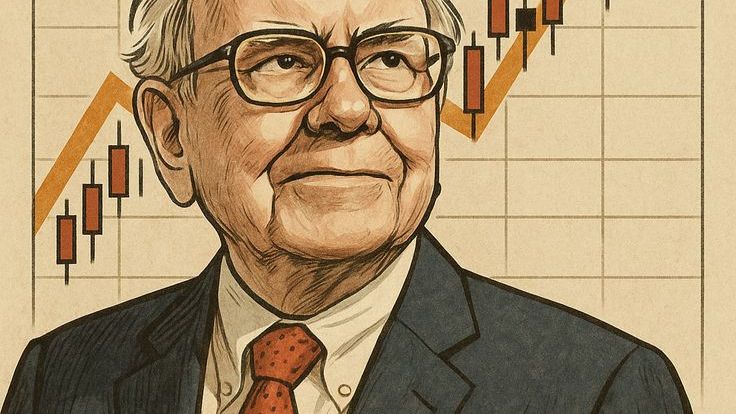
This isn't just motivation; it's the snowball principle Warren Buffett has proven. He started at 11, yet made 97% of his wealth after 65. Compounding requires time.
Let me be straight with you: if you're reading this, you're already at the perfect age.
That's not a motivational poster. It's maths, and it's the lesson Warren Buffett has spent 80+ years living out loud.
The Boy Who Couldn't Wait
Warren Buffett bought his first stock at 11 years old. Three shares of Cities Service Preferred for $38 each. He mowed lawns, delivered newspapers, and scraped together every dollar he could find before most kids had even opened a bank account.
But here's the part Buffett himself finds humbling: he says he wishes he had started earlier.
"I always knew I was going to be rich," he once said. "I don't think I ever doubted it for a minute."
That certainly wasn't arrogance. It was compound interest speaking to him in a language he understood better than most adults around him.
Why "Now" Is Always the Right Answer
Buffett's closest friend and partner, Charlie Munger, seriously didn't start investing until his 30s. Still, he died as one of the wealthiest people in American history.
Ronald Read, a Vermont janitor, started in his 40s quietly and methodically, with no formal education. He died at 92, leaving behind an $8 million estate.
The pattern isn't about picking the right decade. It's about respecting one simple truth Buffett calls the snowball principle: you need wet snow and a really long hill. Start rolling, and time does the heavy lifting.
What Buffett Actually Teaches About Starting Age
If you're under 18: You have something no amount of money can buy later in time. Buffett bought his first stock in 1941. Warren Buffett began his investing journey early, buying his first stock in 1941. This early start granted him something invaluable that money cannot purchase later on: time. By the time most people were finishing college, he had already made and learned from several investments. He filed his first tax return at 14, declaring $35 in income from a paper route. The habits you build now are the wealth you keep forever.
If you're in your 20s: This is the decade Buffett describes as the most critical. You have income, you have risk tolerance, and the compounding runway ahead of you is extraordinary. He started his first investment partnership at 26 with just $100 of his own money. Within years, he was a millionaire. Your 20s are not the time to wait until you "know more". You learn by doing.
If you're in your 30s or 40s: Buffett's mentor Benjamin Graham didn't publish The Intelligent Investor, the book that shaped modern value investing, until 1949, when he was already in his 50s. Buffett read it at 19. But the wisdom inside works regardless of when you encounter it. At 30 or 40, you likely have more stable income, clearer financial goals, and the emotional maturity to stay calm when markets get turbulent. Buffett considers that last part priceless.
If you're 50 or older: Buffett made roughly 97% of his wealth after age 65. Read that again. The man who started at 11 still accumulated nearly all of his fortune in the second half of his life because the snowball had been rolling so long it became unstoppable. Starting at 50 with discipline and a 20-year horizon is still a profound wealth-building opportunity.
The Buffett Principles That Override Age Entirely
Age is context. But these are the rules:
Buy what you understand. Buffett never bought a tech company he couldn't explain to his grandmother. He lost almost nothing in the dot-com crash of 2000 because he stayed in his circle of competence. It doesn't matter if you're 17 or 70; never invest in what you can't explain.
Think like an owner, not a trader. When Buffett buys a stock, he imagines owning the business forever. He's famously said his favourite holding period is "forever". This mindset removes the anxiety of short-term price swings and anchors you to the real question: is this a good business?
The market is there to serve you, not instruct you. His teacher Graham invented "Mr Market", a fictional, emotionally unstable business partner who offers to buy or sell you his share of a company every day at wildly different prices. Some days he's euphoric. Some days he's panicking. Buffett's advice: let him be your servant, not your guide.
Low-cost index funds for most people. Buffett has said repeatedly, including in his own shareholder letters, that for the average investor who isn't going to study businesses deeply, a simple S&P 500 index fund purchased regularly beats almost every alternative. He's even bet on it publicly and won.
Don't lose money. Rule number one, as Buffett puts it, is don't lose money. Rule number two is don't forget rule number one. This sounds simple. It's not. It means avoiding debt-financed speculation, avoiding businesses you don't understand, and avoiding the emotional trap of panic-selling during downturns.
The One Thing That Changes With Age
There is one genuine adjustment to make as you get older: your time horizon changes, and so should your risk exposure. A 20-year-old can watch their portfolio drop 40% in a recession and simply wait; history shows markets recover. A 70-year-old drawing down savings cannot afford to wait a decade for a recovery. Buffett holds large cash reserves at Berkshire precisely because he respects the danger of being forced to sell at the wrong time.
But this is a portfolio allocation strategy. It has nothing to do with whether you should start.
The Real Answer
The perfect age to start investing is the age you are right now, on the day you understand why it matters.
Buffett has never once said he regrets starting at 11. But he's said many times that the most powerful force in investing is time, and no one, no matter how wealthy, can buy more of it.
You already have the one thing even Buffett can't get back: whatever years you have ahead of you.
Start there.