
Understanding Financial Behaviour: Why We Spend, Save, and Invest the Way We Do
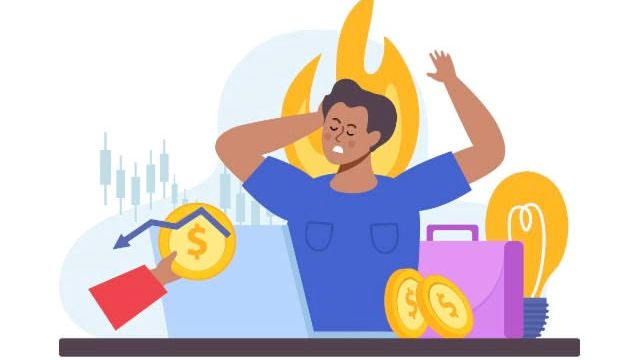
Money decisions are rarely just about numbers. Fear, habits, social pressure, and cognitive biases shape how we spend, save, and invest. Understanding these behaviours can transform financial choices.
Money Is Emotional Before It's Logical
Ask most people why they made a particular financial decision buying on impulse, avoiding the stock market, or refusing to touch their savings even in a crisis and they'll usually offer a rational-sounding explanation. But peel back that explanation, and more often than not, the real driver was fear, habit, social pressure, or a story they've told themselves about money since childhood.
This is the core insight of financial behaviour as a field: humans are not the coldly rational calculators that traditional economics assumes. We are pattern-matching, emotionally-driven creatures who happen to use numbers. Understanding this gap between how we think we handle money and how we actually handle it is the first step toward better financial decisions.
The Biases That Quietly Run Our Financial Lives
Behavioural economists have identified several recurring patterns that shape financial choices across almost every income group and culture.
Loss aversion is perhaps the most powerful. Research consistently shows that the pain of losing money feels roughly twice as intense as the pleasure of gaining the same amount. This is why investors often hold on to a losing stock far too long, hoping to "break even," while selling winning investments too early just to lock in a gain. The fear of loss, not the pursuit of gain, is usually the stronger motivator.
Mental accounting is the habit of treating money differently depending on where it came from or what it's "meant" for even though a rupee is a rupee regardless of its source. A person might refuse to dip into a "vacation fund" to pay off high-interest debt, even when that makes no mathematical sense, simply because the money has been mentally labeled.
Present bias explains why saving for retirement feels so much harder than saving for next month's rent. Our brains are wired to overvalue immediate rewards and undervalue future ones, which is why a smartphone upgrade today can feel more urgent than a retirement contribution that would matter enormously in twenty years.
Herd behaviour drives people to buy when everyone else is buying and panic-sell when everyone else is selling often at exactly the wrong moments. This is less about analysis and more about the deep human discomfort with standing apart from the crowd, especially when money and uncertainty are involved.
Anchoring causes us to fixate on an initial number, an original price tag, a past salary, a friend's investment return and judge every subsequent decision relative to that reference point, even when it's no longer relevant.
Where These Patterns Come From
Financial behaviour isn't formed in a vacuum. It's shaped early, often before a person earns their first paycheck.
- Family scripts: Children absorb attitudes toward money by watching their parents whether saving was treated as a virtue or a source of anxiety, whether debt was normalized or feared, whether money was a taboo topic or discussed openly.
- Scarcity and abundance experiences: People who've lived through financial scarcity even briefly often develop lasting hypervigilance around money, sometimes leading to compulsive saving, and sometimes, paradoxically, to impulsive spending as a coping mechanism.
- Social comparison: In an age of visible consumption vacations, gadgets, weddings documented online the pressure to match a peer group's lifestyle can override even well-intentioned financial plans.
- Financial literacy gaps: Simply not understanding compounding, inflation, or how credit works leaves people vulnerable to decisions that feel reasonable in the moment but compound into long-term harm.
Common Behavioural Traps in Everyday Life
A few patterns show up again and again in personal finance, regardless of income level:
- Lifestyle inflation as income rises, spending rises just as fast (or faster), leaving no more financial cushion at a higher salary than at a lower one.
- Impulse purchases are justified after the fact buying something on impulse and then constructing a rational-sounding reason for it afterward, a phenomenon behavioural scientists call post-hoc rationalization.
- Debt normalization treating credit card debt or EMIs as a permanent, unremarkable feature of monthly life rather than a cost to be minimized.
- Avoidance some people cope with financial anxiety not by confronting it but by avoiding bank statements, bills, or investment reviews altogether, which usually worsens the underlying problem.
- Overconfidence in market timing, believing one can consistently predict when to buy low and sell high, despite substantial evidence that even professional fund managers struggle to do this reliably.
Building Better Financial Habits
The encouraging part of behavioural finance is that once these patterns are named, they can be worked with rather than fought head-on.
- Automate good decisions. Automatic transfers to savings or investment accounts remove the daily willpower battle the money moves before it can be spent.
- Use mental accounting deliberately. Instead of fighting the instinct to label money, use it constructively: a clearly labeled "emergency fund" or "debt payoff" account can make saving feel more concrete and motivating.
- Create friction for bad habits, ease for good ones. Deleting saved card details from shopping apps adds a small pause before impulse purchases; setting up auto-debit for investments removes the pause that often leads to procrastination.
- Name the emotion before the decision. Pausing to ask "am I buying this because I need it, or because I'm stressed/bored/comparing myself to someone else?" interrupts the automatic response long enough to choose differently.
- Review, don't avoid. Regular, scheduled check-ins with one's own spending and investments even just monthly reduce the anxiety-driven avoidance that lets small problems become large ones.
The Bigger Picture
Financial behaviour research doesn't suggest people are irrational or incapable of good decisions. It suggests something more useful: that financial choices are deeply human, shaped by emotion, environment, and habit as much as by numbers on a spreadsheet. Recognizing this isn't a weakness to overcome once and for all it's an ongoing practice, much like physical fitness. The goal isn't to eliminate emotion from money decisions, which is neither possible nor desirable, but to build enough self-awareness and structure that emotion doesn't quietly sabotage long-term goals.
In the end, the most successful investors and savers aren't necessarily the smartest people in the room. They're often simply the ones who've learned to recognize their own behavioural blind spots and built systems that work even when willpower doesn't.